Bat box checks!

Featured

Today’s blog post will be about a really cool thing I did a week ago! I was fortunate enough to meet the Berkshire and South Buckinghamshire bat group on the 3rd of August. They invited me along to a bat box check run by Hampshire bat group on the following day! This post is therefore going to be all about the why’s, where’s and how’s of bat box checks.

Bat boxes are artificial bat roosts that anyone can build and put up in their garden*. The RSPB have nifty instructions for how to make a simple one here: www.rspb.org.uk/get-involved/activities/give-nature-a-home-in-your-garden/garden-activities/buildabatbox/.

____________________________________________________________

* – One issue with bat boxes is that bats (in the UK at least) are very picky. It can take years for them to end up using a bat box, but having one up is still better than nothing! Plus it’s a fun DIY project!

Bat box checks are a super important way we can survey how many bats there are in an area. I must put a little warning here and say that in the UK, you can only conduct a bat box check if you have, or are working alongside someone who has, a specific license to do so. If not, it is illegal to intentionally disturb a bat roost and you can be fined and even face imprisonment1,2. Therefore DO NOT TRY CHECKING BAT BOXES AT HOME. Chances are, however, if you live in the UK, you can get in touch with your local bat group (which you can find through the BCT website: www.bats.org.uk/support-bats/bat-groups) and see if you can tag along to any of the checks they run throughout the year. That is what I did!
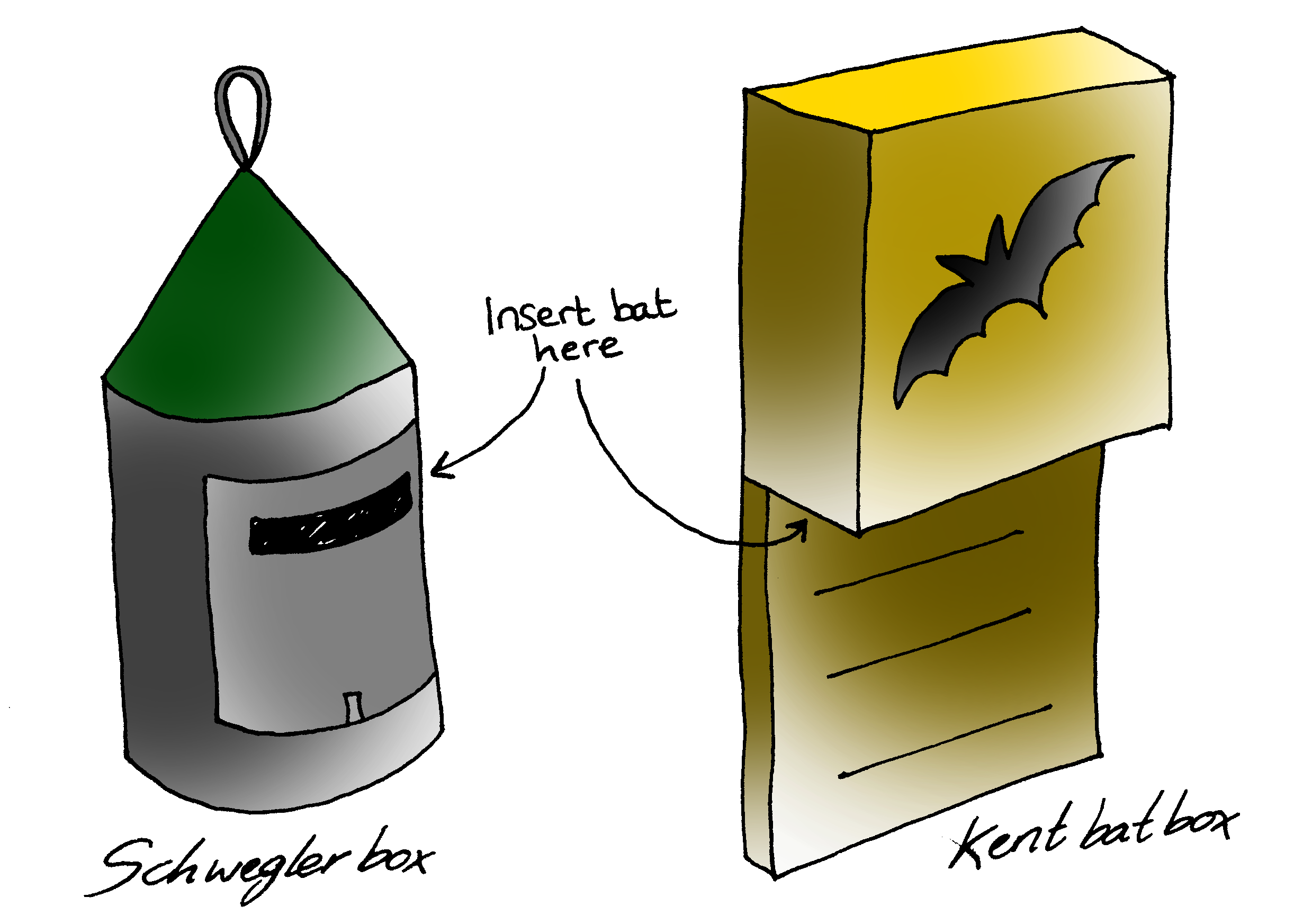
Two common types of bat box

There are many types of bat box. The type I’ve most encountered is the Kent bat box where the bats lie snug between slats of wood. There are also Schwegler bat boxes (see pic) which are quite expensive but important for bat box surveys as they let you catch and measure bats. Many bat enthusiasts also design and build their own bat boxes. I’ve seen some marvellous creations, the most notable was one containing polystyrene insulation to keep the bats warm in winter! Each box has a specific way it is checked for bats. Kent bat boxes are simple – you can shine a torch* up inside from below, or poke an endoscope inside. Schwegler boxes are opened from tree height and if bats are present, the batworker will bring the box down to assess the bat’s condition.

____________________________________________________________

* – briefly of course, you don’t want to spook any snoozing bats!
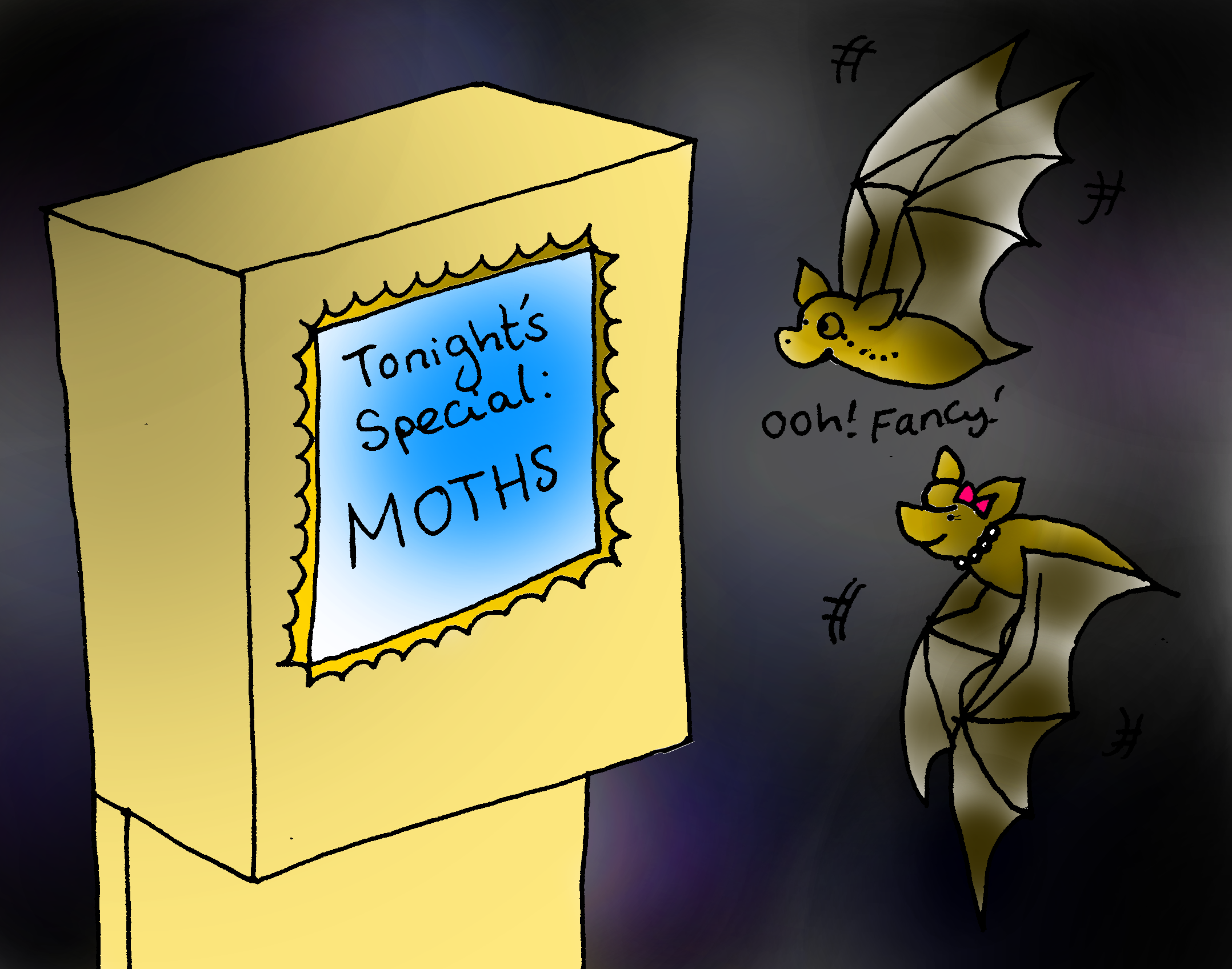
Bat boxes are more often filled with moths than bats – it’s a wonder they don’t use them as restaurants!

Box checks are carried out in the day time, as that’s when the bats are using the boxes to snooze in. Myself and members of the two bat groups spent the morning surveying an area of woodland. It was super nice for me to be invited along, as living in the middle of a large town means I don’t often get to be surrounded by trees! We worked together to check many different boxes. More often than not, the bat boxes would contain a whole host of other animals. The most humorous inhabitants were clusters of moths! I’d have thought a bat box full of moths (the favourite food of most UK bat species) would be the bat equivalent of a gourmet restaurant! But no, occupied boxes were few and far between.

We weren’t let down, though, as we found our first bat snoozing in a Kent box! Having seen the majority of roosting bats in Honduras and Costa Rica, I am always taken by just how small UK species are. So often I hear people telling me about finding baby bats, but when I ask how big the bat they found was, I enjoy telling them that what they’d usually found was a full grown adult! We continued our search and this time, found an occupied Schwegler box. For this box, the licensed ecologist removed it from the tree and gently took the snoozing bat out to measure it. I was totally honoured when they asked if I’d like to help with this*!!!

____________________________________________________________

* – Now I must mention that I was only able to do this because I’ve had quite a bit of experience handling and measuring bats in Honduras. I also have an up-to-date rabies vaccination and am working towards having a licence one day.
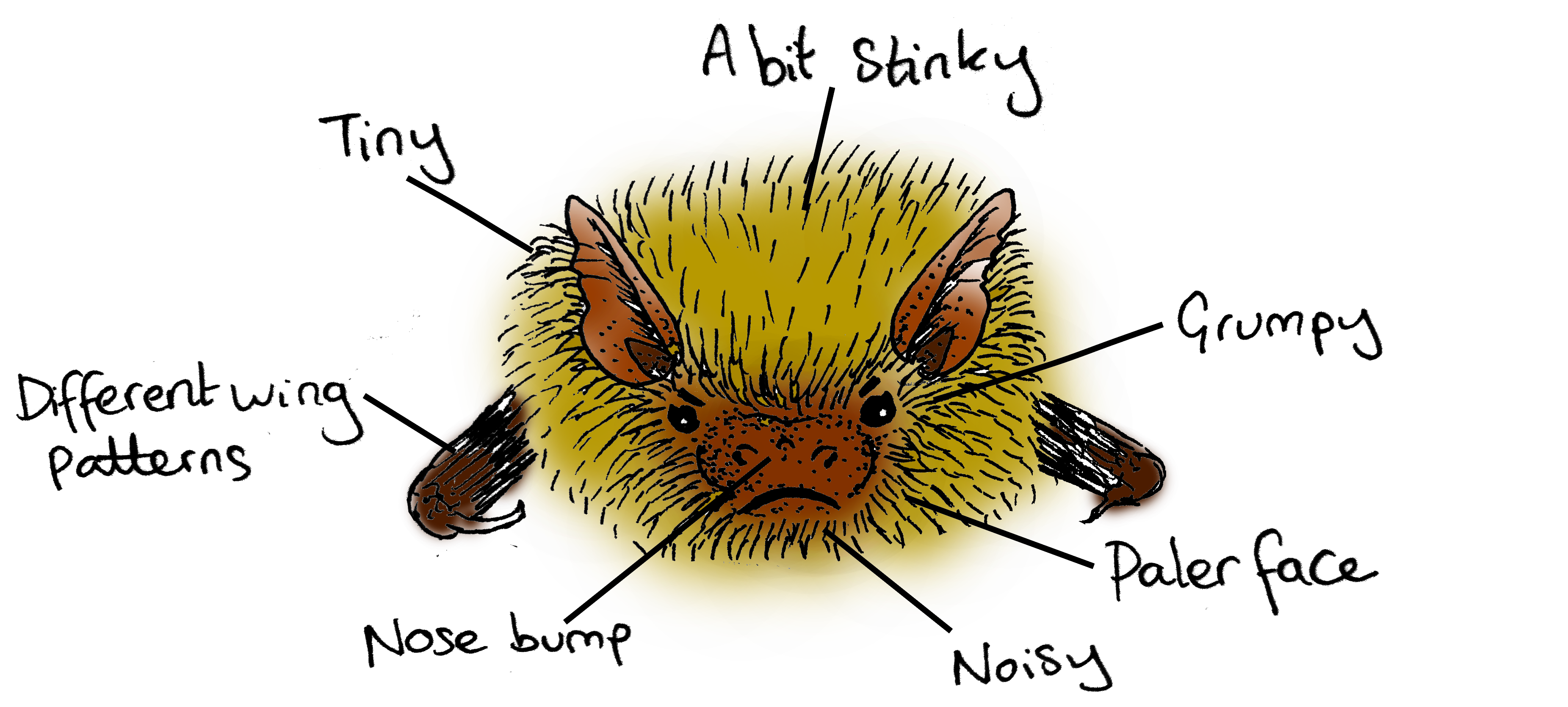
The anatomy of a soprano pipistrelle in the hand (very scientific!)

Given that bats are (pretty much) my entire world, you can imagine just how excited I was to be able to hold one! The bat in question was a male soprano pipistrelle (Pipistrellus pygmaeus). These bats are just awesome! They’ve only recently been recognised as a separate species to the common pipistrelle, and are named after their higher pitched echolocation calls – which is adorable! Soprano pips have paler faces to their common pip cousins, and also have differing wing patterns and a small bump on their nose between their nostrils3. I’ve been told by bat carers that soprano pipistrelles tend to be among the grumpiest, noisiest and smelliest bats to care for*! The bat we found in the box was also possibly at his stinkiest point of the year. It’s now breeding season for bats in the UK, and so he’d be busy secreting all kinds of sexy smells to attract the ladies. To humans, this smells like a sort of musty, nutty, slightly urine-like odour, but to female bats, I’d imagine it’s quite pleasant!

____________________________________________________________

* – This fact was my saving grace when I found myself conducting a bat walk, a few months back, for two very young, hyperactive children who weren’t that interested. I managed to get them excited when I mentioned we were trying to spot the ‘stinky bats’!

We only took a few measurements before putting him back in his Schwegler box and placing it safely back on the tree. We checked his weight, forearm length and finally his reproductive status. Male bats definitely invest heavily in their genitals around this time of year! Despite being tiny, his testicles were about 1/6th of the size of his body*! A few more boxes later and we were able to find a harem of female soprano pipistrelles. These girls will also be on the look out for mates now they have finished nursing their pups. Checking the female bats nipples allowed us to check if they had had a pup this year. If you are of a non-biology persuasion, this might seem quite strange! But I assure you, this information is super important for telling us about how well the bats are reproducing, and therefore how the population of this species is doing.

____________________________________________________________

* – That’s me just estimating, don’t quote me on that!

In total, we found 9 soprano pipistrelles that day. It was absolutely fantastic to see them all, and also observe the scientific processes. Bat box checks in the same area aren’t carried out very often to ensure that the bats aren’t too disturbed. None of these checks are carried out in the winter as hibernating bats must be left alone to prevent them waking and burning precious calories. This time of the year, however, is a great time to contact your local bat group and see if you can tag along. It is always amazing to see a bat up close, and learn all about the science happening where you live! The records collected from these checks will usually be sent to national databases around the country, allowing us to see trends over time and trends in different areas. Pretty awesome stuff!

To finish, I’d just like to say a massive thank you to the Berkshire & South Buckinghamshire Bat Group and the Hampshire Bat Group for inviting me along! Keep up all the great work!

____________________________________________________________

  1. Wildlife and Countryside Act (1981)
  2. Conservation of Habitats and Species Regulations (2017)
  3. Dietz & Kiefer, 2016 | ISBN: 978-1-4729-2202-1

Follow the adventures on:

Facebook: www.facebook.com/AdventuresinBatScience/

Twitter: twitter.com/AdventuresBat

Instagram: www.instagram.com/adventuresinbatscience/

Or drop me an email if you have any questions: adventuresinbatscience@gmail.com
The love lives of bats

Hi everyone! This week’s post will cover the sauciest topic of bat science – bat reproduction! This coincidentally coincides with the start of August, which is the beginning of the mating season for the bats in the UK!

Most bat species have a polygynous mating strategy1. This means one male will try and mate with as many females as possible. He then has nothing more to do with his pups1. Usually, with polygynous animals, the females end up being super choosy with who they mate with. So before any of the fun can happen, he has to go ‘on the pull’. Here are some of the wonderful ways male bats can score:

Sexy squeaks

Female Mehely’s horseshoe bats prefer higher-pitched males

Ultrasonic squeaking is not just for finding food, but can also allure females in a charming serenade. If you happen to be a male Mehely’s horseshoe bat (Rhinolophus mehelyi), you’ll get more female attention if your song is higher pitched2*. Or perhaps, if you are a male greater sac-winged bat (Saccopterus bilineata) or a Seba’s short-tailed fruit bat (Carollia perspicillata), your serenade will be long, complex and unique to you3,4. We still don’t know much about batty serenades, and this sort of signalling in nature has loads of awesome avenues to explore such as how a male learns his song, which songs are most successful, and what function does song complexity serve?

____________________________________________________________

* – The females would be more a fan of the BeeGees of the bat world, than the Barry White’s. Sorry, Barry…

Alluring leks

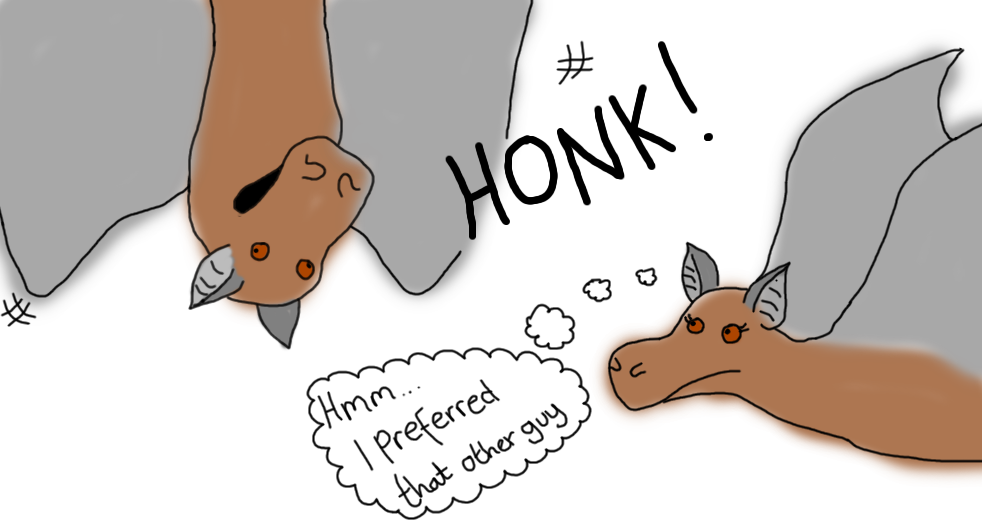
Male hammerhead fruit bats line up along river banks and honk at females, who then choose who to mate with

Lekking is quite rare in bats, and is more common in birds. A lek is when loads of males come together, in visual or auditory range of one another, and show off to the females*. The result is a plentiful buffet of potential mates laid out for the females to take their pick from. If you are a male Hammerhead fruit bat (Hypsignathus monstrosus), the best way to get a lady bat interested is to line up with other males, usually along a river, making enormous honking noises and flapping your wings5. They are the only species of bat that definitely lek, but a couple more species exhibit some lek-like behaviour that’s sort of lekking but not quite6.

____________________________________________________________

* – It’s also important that the area where the lek forms does not have many resources on it, either. For something to be officially a lek, there are lots of boxes to tick!

Exciting epaulettes

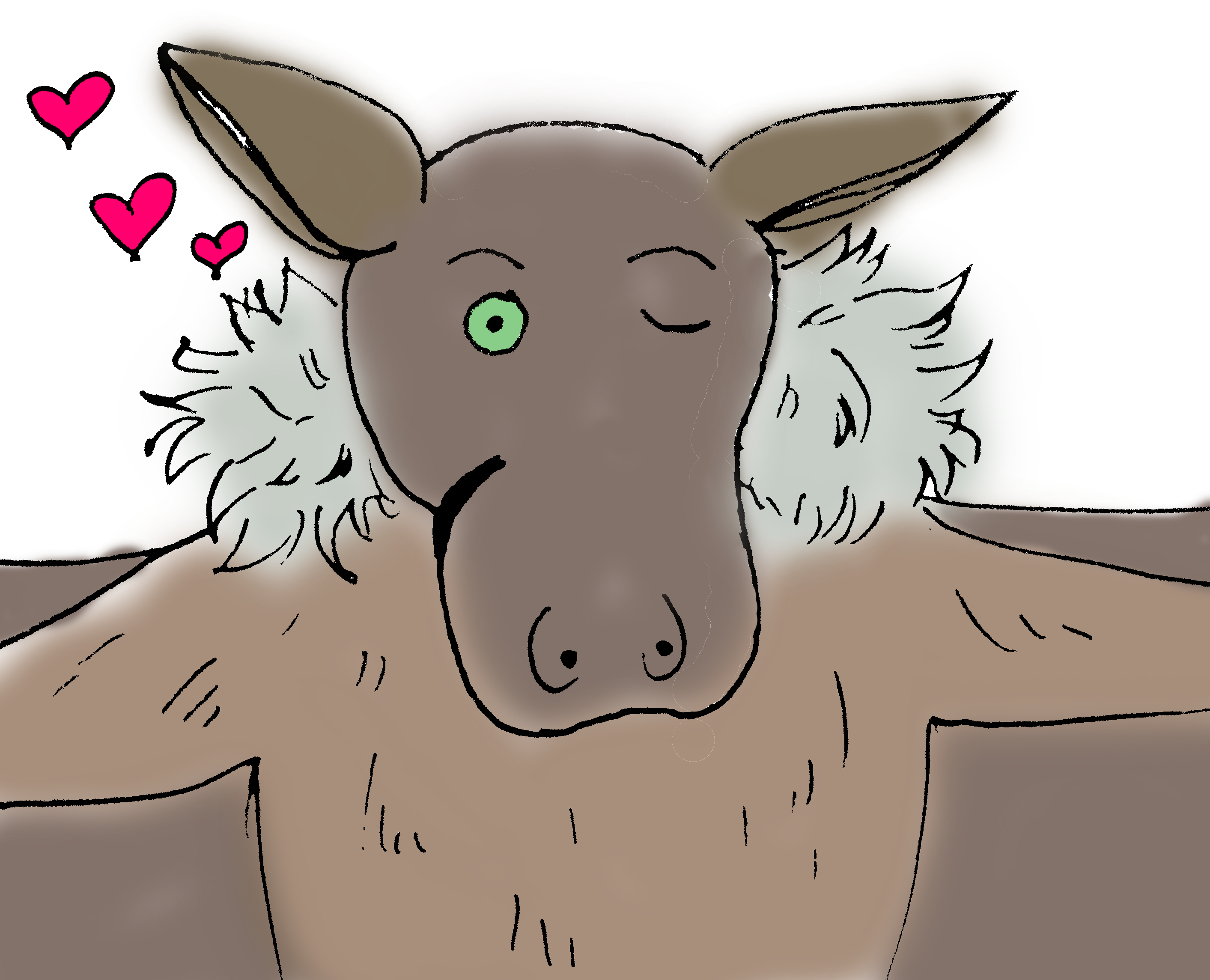
Male epauletted fruit-bats will flash the females with their charming shoulder tufts in an attempt to woo them

It’s not just male birds who can dazzle the ladies with their colourful bodies, bats can too! Epauletted fruit bats have pale tufts of fur on their shoulders called epaulettes. When the males beat their wings and stretch specific muscles, these tufts become more visible and so are thought to attract females7.

Dirty dancing

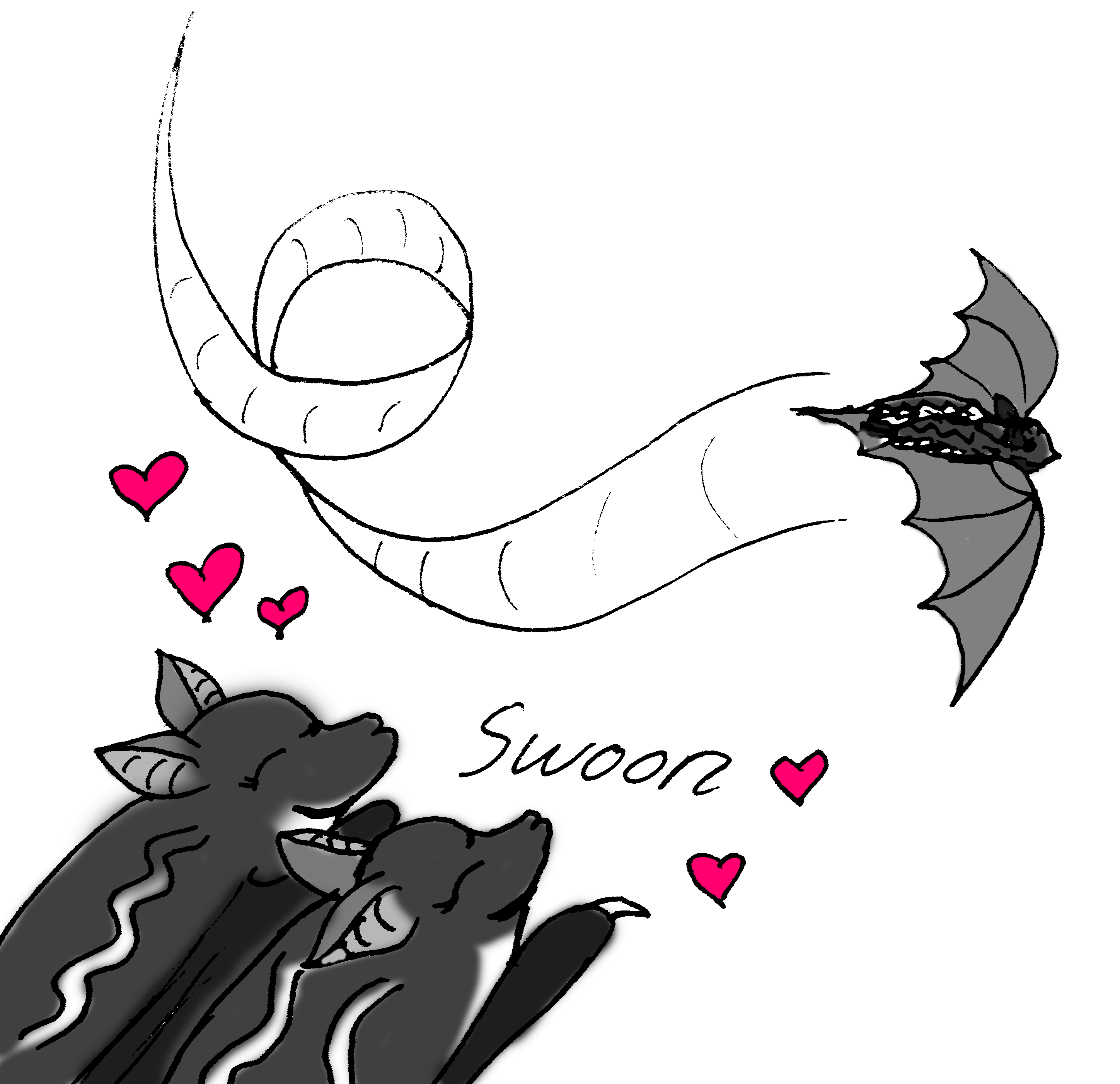
Male greater sac-winged bats impress the ladies with agile aerobatic displays

If you’re a female bat with a taste for aero-bat-ics then look no further than the swooping, soaring male greater sac-winged bat (S.bilineata)4,8! Whilst it’s likely more species perform aerial courtship displays (‘dancing’ on the wing to impress the girls), this species in particular has been the most studied. Researchers have also found that the smaller, more symmetrical bats, are more agile in the air and therefore dance the best, winning more females8. This is a nifty example of reverse sexual size dimorphism*, where, unusually for mammals, the females are larger than the males.

____________________________________________________________

* – Sexual dimorphism is the difference in shape between males and females

Saucy smells

Female greater sac-winged bats will choose a mate based on the bacteria he cultivates in his wing pouch

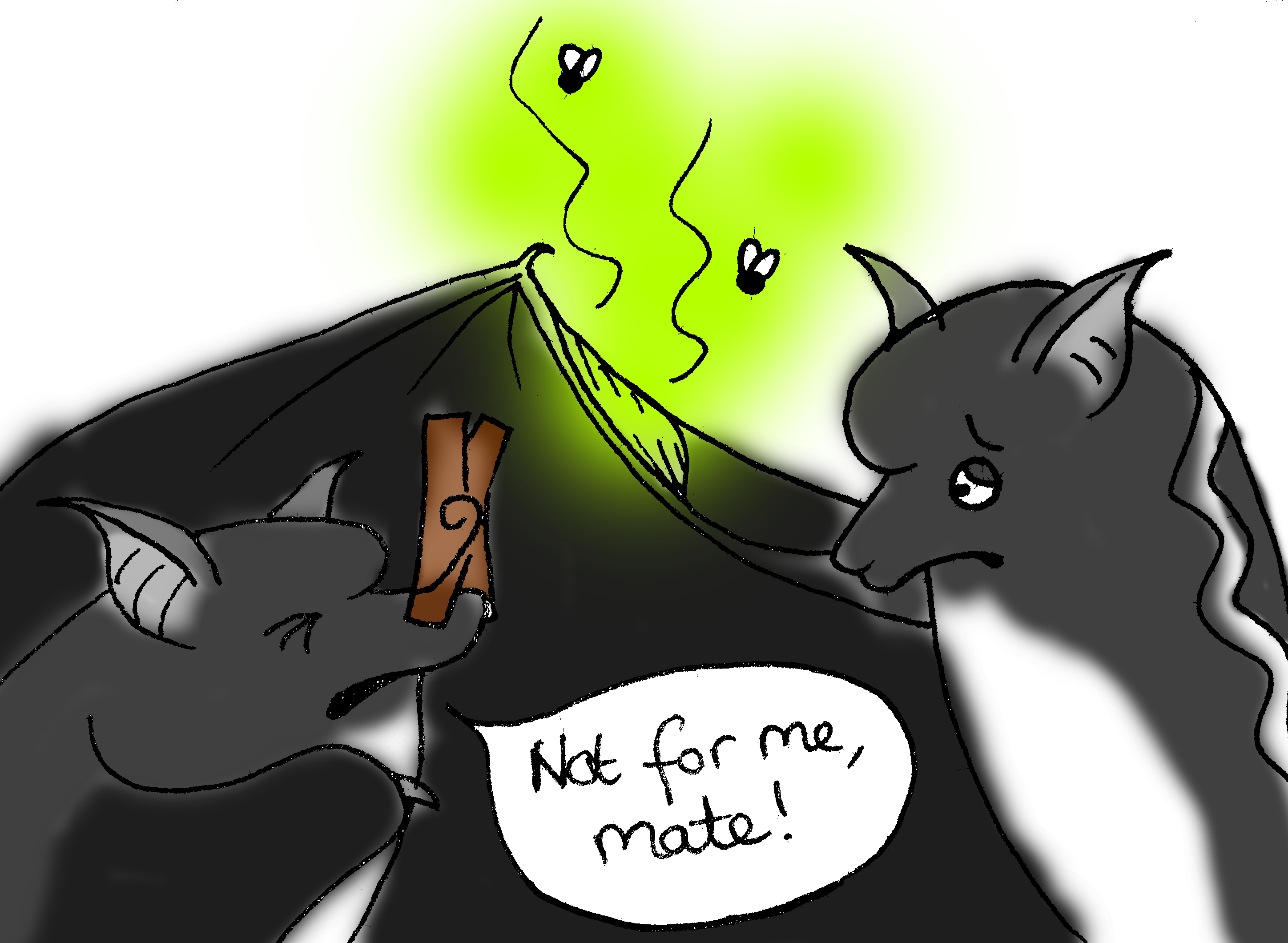
And once more, we return to the greater sac-winged bat. It’s either that this bat is just the king of flirtation methods, or that it was just quite common and therefore easy to study! That aside, this is one of my favourite bat courtship behaviours: male greater sac-winged bats will fill the small sacs on their wings with “genital and gular secretions”9*. This creates a bacterial soup that is unique to each male bat9, and this is where it gets cool. We think the bacterial soup smell tells the females a lot about a males immune system. For her to have healthy offspring, she wants to find a male with an opposite immune system to hers†. When the male rubs his bacterial soup sacs on her, she can determine if his immune system is a good opposite to hers, and then decide to mate! Besides being a little bit gross, isn’t that just amazing?! Kind of like a more efficient smell-based Tinder for bats! Of course, I’m not sure if this has been confirmed for certain, but something similar to this has been found in humans10 – an excellent experiment to read about if you have time.

____________________________________________________________

* – I’ll leave you to look up what that means

† – This will mean her babies can fight more illnesses as they have a larger variety of genes. Think of it as a two puzzle pieces fitting together because their edges are opposites of each other – the result is you get a larger piece of puzzle, covering more ‘illness ground’. The official term for mating with someone with an opposite trait to you is ‘disassortative mating’

And… cheating

 If you decide you can’t be bothered wooing the choosy females, you can just cheat. Many bats, like a lot of mammals, hibernate during the winter. As they are getting ready for hibernation, however, they enter a semi-hibernation state which is like a very deep sleep where you get quite cold. This is called torpor, and a few male bats take advantage of this. Some do mate with torpid females1,11. Pretty grim.

____________________________________________________________

So there is a summary of some of the fancy, unhygienic or damn-right grim ways you can obtain a mate if you’re a male bat. Some bats, unusually for mammals, do practice monogamy (mating with just one partner), such as the lesser sac-winged bat (S.leptura) or the grey-headed flying fox (Pteropus poliocephalus)*. There is even an interesting paper exploring homosexuality in bats12. After mating, bats will usually have one pup a year, although some bats like the Eastern red bat (Lasiurus borealis) will have quadruplets1†!

____________________________________________________________

* – although, having said that, mating systems are a bit of a spectrum and some individuals will be a bit promiscuous

† – this is crazy when you think that these bats sometimes have to carry their young whilst flying!

So as the bat mating season begins in the UK, I hope this post has provided some useful advice and tips for any male bats out there that might be reading this, provided they don’t cheat!

____________________________________________________________

  1. Taylor 2019 | ISBN: 978-1-78240-557-3
  2. Puechmaille et al. 2014 | DOI: 10.1371/journal.pone.0103452
  3. Behr & von Helversen 2004 | DOI: 10.1007/s00265-004-0768-7
  4. Knörnschild et al. 2014 | DOI: 10.1163/1568539X-00003171
  5. Bradbury 1977 | DOI: 10.1111/j.1439-0310.1977.tb02120.x
  6. Toth & Parsons 2013 | DOI: 10.1111/jzo.12069
  7. Wickler & Seibt | DOI: 10.1111/j.1439-0310.1976.tb00941.x
  8. Voigt et al. 2005 | DOI: 10.1007/s00265-004-0874-6
  9. Voigt et al. 2005 | DOI: 10.1644/1545-1542(2005)086[0745:BBABSS]2.0.CO;2
  10. Wedekind et al. 1997 | DOI: 10.1098/rspb.1995.0087
  11. Hosken et al. 1997 | DOI: 10.1098/rspb.1997.0055
  12. Riccucci 2011 | DOI: 10.4404/Hystrix-22.1-4478

Follow the adventures on:

Facebook: www.facebook.com/AdventuresinBatScience/

Twitter: twitter.com/AdventuresBat

Instagram: www.instagram.com/adventuresinbatscience/

Or drop me an email if you have any questions: adventuresinbatscience@gmail.com
When bats get in-tents…

Wow, it’s Wednesday again – that week went fast!

Apologies if last week’s blog post was a bit everywhere – that’s what happens when I try and write an overview of bats but also not write a small novel at the same time. Today’s post will be much more to a point and will be an overview on a group of bats very close to my heart: the tent-making bats.

It always blows my mind that many people I’ve met don’t know about these funky critters. I honestly think they should be up there with all the main animals people think of*. Put simply, these are bats that chew leaves to make tiny houses to live in! HOW ADORABLE IS THAT?! Phew… ok explosion over… but seriously, incredible, right?

____________________________________________________________

* – I think that about all bats, but I have to compromise somewhere…

Some illustrations of tent-making bats that I did, along with their tents

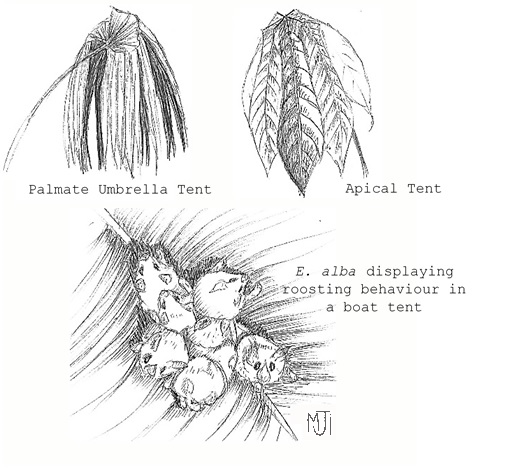
There are 22 documented species of bat that make tents1, some of these bats are obligate tent roosters* (e.g. the Honduran white bat, Ectophylla alba2) whereas others can be found in different roosts as well, such as caves and trees (e.g. the Jamaican fruit-eating bat, Artibeus jamaicensis3). They are only found in the paleotropics (tropical Africa, Asia and Oceania) and the neotropics (Central and South America). There are many different shapes of tent such as pinnate, apical, conical, boat and palmate umbrella to name but a few (see pictures)4. Some bats, like the Honduran white bat, will only make one kind of tent out of a fairly restricted number of plant species†4. Others are masters of flexibility and use a whole range of plants to make many different shaped tents, such as the Thomas’ fruit-eating bat (Dermanura watsoni‡)4. The bats make the tents by chewing carefully, avoiding any important plant tubes. The result is that the leaf remains alive whilst the bats live inside, and some tents can even last up to 9 months5. It’s quite dependent on the plant species, though, as tents made in Musa spp. only last for under a month6. I guess because some leaves go mouldy quicker.

____________________________________________________________

* – Only make, and roost in, tents

† – Boat tents in mostly Heliconia and Musa spp.4 if you’re interested!

‡ – Sometimes called Artibeus watsoni in earlier research

So why do they make these tents? Pretty much for the same reasons we build houses! Tents provide the bats with shelter from rain, wind and sun, as well as some protection from predators7. Tents also have the added quality of being quite ephemeral*. Unlike cave-roosting bats, tent-making bats can switch roost position frequently, preventing accumulation of ectoparasites8†. There was some hype in the 90’s based on a single observation of a male bat making a tent. Ideas were drawn up about males making tents as a means of attracting females, and nice tents being defended by males4,5,9. I got very excited about this and wrote a short journal article on it in my first year of uni (available here: https://exestem.files.wordpress.com/2018/11/undergraduate-science-volume-2-issue-1-march-2018.pdf) but there are a few reasons why the theory is unlikely to be the case…

____________________________________________________________

* – Ephemeral: fleeting, brief, here for a moment and then gone the next, tents go mouldy after a while whereas caves don’t etc… Undoubtedly one of my favourite words!

† – Ectoparasites are parasites on the surface of the bats; things like ticks and bat flies. If bats hang around in the same spot for a long time, in theory, more parasites will find them.

More illustrations! Honduran white bats (shown above) are sometimes called cotton ball bats and you can see why

Firstly, as mentioned, bat tents are very ephemeral. If a males bat’s reproductive success (how many girlfriends he manages to pull) depends on the quality of the tent he makes, then he’s only got a fairly short time to get his game on – making it quite unlikely this is the case10. Furthermore, when I went out to Honduras to see these bats for myself, I found loads of tents used by just a few bats*. A male would therefore have to defend a large number of tents in his territory, which is tricky and impractical. Some of these tents would lose condition faster than others and potentially compromise his reproductive success if a mouldy tent dissuades the females. Finally, scientists have also now observed a female building a tent11, so it’s not just a guy thing. That was sort of the nail in the coffin for that idea, but hey – I got a small published review paper from it so I’m happy!

____________________________________________________________

* – Interestingly, bats would use these extra tents as escape shelters if accidentally disturbed; for example, by one of my volunteer research assistants suddenly blasting ‘Titanium’ by David Guetta in the middle of data collection in the Honduran swamp forest… Words fail me.

And that brings me on to the coolest thing about tent-making bats – we really don’t know much about them. How often do they make tents? How long does it take them? Is it a team effort or just one bat? Do they learn to make tents from each other, or is it innate? We just don’t know! It’s odd because usually funky behaviour like this gets a lot of scientific attention, but sometimes even the most charismatic animals can get overlooked. I have heard of only three observations of tent-making behaviour, and only 2 of those were direct11,12. It’d be awesome to just go out there and find out the answers, but funding is hard to come by, and usually requires a precise reason why the research is being done. Sadly ‘because it’s cool’ doesn’t count!

I thought I’d end on an example of some excellent early-scientist sass. Anyone who’s read some old science papers will know that scientists were often quite rude to each other if their ideas conflicted. One of the very first scientists to describe tent-making bat behaviour had a hard time convincing his peers that the bats made the tents, not some insect species13. He ends his 1932 paper with the fabulous quote:

“I sent some of the leaves to my doubting friend Miller and when I saw him in Washington a few days ago he admitted in moderation that it looked now a little as if I might be right after all. I rather think so too.”

Oh daaamn!

____________________________________________________________

  1. Rodríguez-Herrera et al. 2007 | ISBN: 9968-927-28-4
  2. Rodríguez-Herrera et al. 2008 | DOI: 10.3161/150811008X331126
  3. Ortega & Castro-Arellano 2001 | DOI: 10.2307/0.662.1
  4. Kunz et al. 1994 | DOI: 10.1007/BF01464350
  5. Kunz & McCracken 1996 | DOI: 10.1017/S0266467400009342
  6. Chaverri & Kunz 2006 | DOI: 10.1111/j.1744-7429.2006.00107.x
  7. Foster & Timm 1976 | DOI: 10.2307/2989720
  8. Lewis 1995 | DOI: 10.2307/1382357
  9. Tan et al. 1997 | DOI: 10.1080/00222939700770861
  10. Adams et al. 2017 | As yet unpublished (available here: https://science.umd.edu/faculty/wilkinson/Adamsetal2017.pdf)
  11. Rodríguez-Herrera et al. 2006 | DOI: 10.3161/1733-5329(2006)8[557:TBBFEA]2.0.CO;2
  12. Balasingh et al. 1995 | DOI: 10.1111/j.1439-0310.1995.tb00326.x
  13. Barbour 1932 | DOI: 10.1086/394410

Follow the adventures on:

Facebook: http://www.facebook.com/AdventuresinBatScience/

Twitter: @AdventuresBat

Instagram: http://www.instagram.com/adventuresinbatscience/

Or drop me an email if you have any questions: adventuresinbatscience@gmail.com